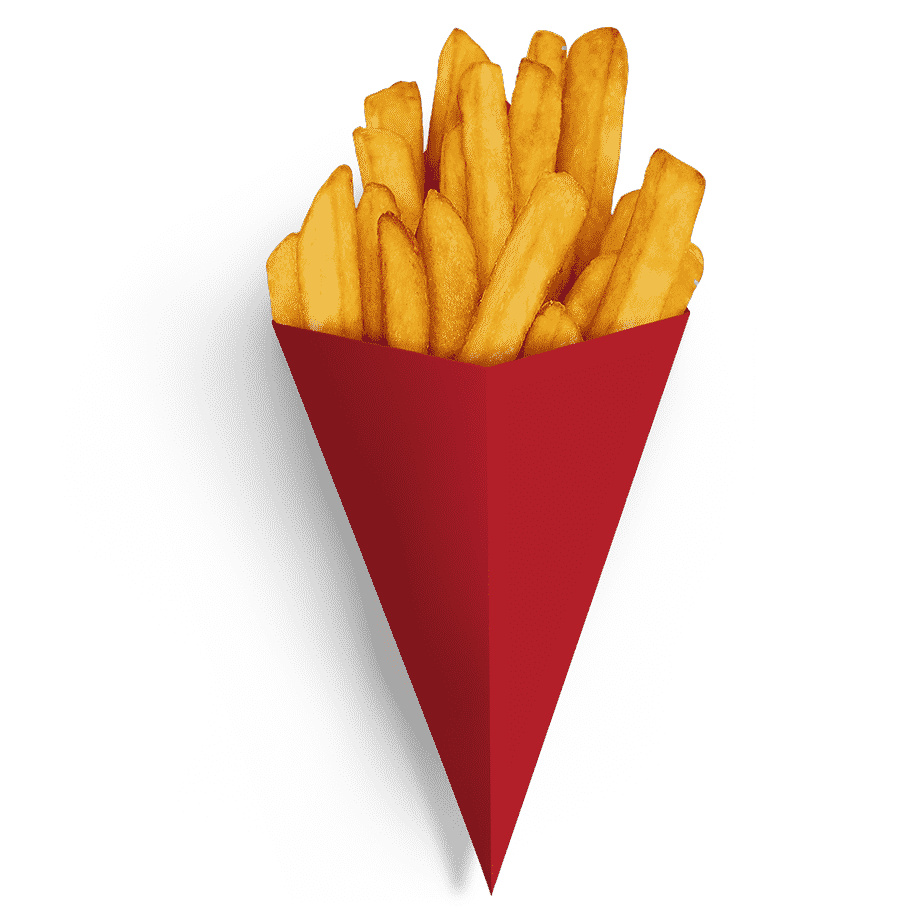
Extra crispy fast food Fries

Extra Crispy Fast Food Fries: Why Local QSR Operations Face Triple Constraints That Chain-Engineered Fries Can't Handle

Local quick-service restaurants operate under a fundamentally different constraint model than international chains. This isn’t merely a question of scale—it’s a structural difference in how unpredictability, competition, and environmental variables intersect. Large international chains benefits from centralized demand forecasting, standardized infrastructure, controlled service environments, and engineering resources that smooth operational variability. A local QSR does not.

The local operator faces three simultaneous constraints that chain-optimized products were never designed to address: direct competitive pressure from better-funded competitors operating next door, unpredictable customer flow patterns without enterprise-grade forecasting tools, and physical service conditions that shift with seasons, weather, and space limitations.

These three constraints converge on a single pain point: fries. Standard fries—engineered for controlled, high-volume, immediate-service environments—break down when exposed to the variability that defines local QSR operations. Not occasionally. Structurally.

The solution isn’t better execution. It’s selecting a fry engineered to perform across all three constraint dimensions simultaneously.

Constraint 1: Competitive Differentiation When You Can't Outspend the Chain Next Door

A local QSR competes directly with brands that spend millions on marketing, brand recognition, and perceived consistency. The local operator cannot win on advertising reach, cannot match drive-through speed optimization, and cannot leverage global supply chain pricing.

But there is one dimension where a small operator can win decisively: perceived product quality.

Customers have internalized quality benchmarks from frequent QSR visits. When they try your fries, they’re not evaluating in isolation—they’re benchmarking against chain standards embedded in their sensory memory.

If your fries are merely equivalent, you lose. You needed to match their quality while also offering something else—better burgers, friendlier service, unique menu items. But if your fries are demonstrably better—crunchier, longer-lasting, more visually consistent—you create a tangible quality signal that justifies choosing the local option over the familiar chain.

This isn’t subjective. Customers notice when fries stay crispy through an entire meal. They notice when the last bite has the same texture as the first. They notice when fries don’t collapse into grease-soaked softness after five minutes.

That noticing becomes word-of-mouth. It becomes repeat visits. It becomes the answer to “why should I try your place instead of [chain name]?” Standard fries can’t create that differentiation. Engineered fries can.

Did you know that?

All Lutosa coating - whether flavoured or not - are gluen-free, i.e. they do not contain wheat or derivatives of wheat. This makes them well-suited for people who suffer from celiac disease and for those who prefer to stick to a gluten-free diet.

Constraint 2: Throughput Variability Without Enterprise Forecasting Infrastructure

Chain restaurants use predictive analytics, historical transaction data, and real-time dashboards to anticipate demand spikes and adjust production timing. Local QSR operators use intuition, experience, and occasional chaos.

The result: unpredictable peaks. Friday lunch rush hits twenty minutes earlier than expected. A local event doubles foot traffic without warning. A sudden rain shower drives everyone indoors at once.

Standard fries force a choice during these peaks: either cook reactively and make customers wait, or cook proactively and risk serving degraded product.

Reactive cooking maintains quality but kills speed. Customers wait eight minutes for fresh fries. Orders stack up. Staff stress rises. Some customers leave.

Proactive cooking maintains speed but compromises quality. Fries sit under heat lamps. Texture degrades. Customers receive acceptable-but-not-great product. Satisfaction drops slightly—not enough to complain, but enough to not return next week.

Long-holding fries eliminate this trade-off entirely. With up to 30 minutes of texture stability, operators can batch-cook during the early stages of a rush without texture penalty. The kitchen stays ahead of demand without sacrificing crispness.

This isn’t just quality preservation. It’s throughput optimization. More customers served per hour, with consistent quality, using the same equipment and staff. The bottleneck shifts from synchronization timing to pure production capacity.

For a local QSR running lean operations, this removes the single biggest friction point during peak periods.

Constraint 3: Environmental Variability from Outdoor Service and Seasonal Conditions

Many local QSR operators depend significantly on outdoor seating for revenue – particularly in Europe where terrace dining drives substantial traffic from spring through autumn. Some operate in mixed indoor-outdoor configurations. Others serve in semi-open food court environments or street-facing locations.

These outdoor service conditions expose fries to environmental variables that indoor-only service avoids: summer heat and humidity, winter cold, wind, and ambient moisture. While these factors affect all fries to some degree, the coating structure of engineered fries – such as Ultra Crunchy – provides properties that may help stabilize performance across variable conditions.

Hamburger - Our 14-14 ultra-crunchy fries served with hamburger

Why These Constraints Require a Single Integrated Solution

Each constraint alone could theoretically be managed through operational compensation. Better marketing addresses competitive pressure. Better staffing addresses throughput. Better packaging addresses environmental variables.

But these constraints don’t appear in isolation. They converge. A rush occurs on a hot summer day when the chain competitor across the street is running a promotion. All three constraints hit simultaneously.

Standard fries cannot absorb this convergence. Operational workarounds cannot compensate fast enough. The quality failure becomes structural and predictable.

Product selection becomes the highest-leverage intervention available. A fry engineered for extended hold time, environmental resistance, and consistent visual quality doesn’t just address one constraint – it addresses the intersection of all three.

Want to test how Ultra Crunchy handles your peak constraints?
Contact us

Did you know that?

All Lutosa coating - whether flavoured or not - are gluen-free, i.e. they do not contain wheat or derivatives of wheat. This makes them well-suited for people who suffer from celiac disease and for those who prefer to stick to a gluten-free diet.

The Technical Profile That Matches Local QSR Reality

The specifications that matter for local QSR operations are not the same ones that matter for industrial-scale chains.

Hold time beyond 20 minutes becomes operationally significant. It covers terrace service distance, throughput variability during peaks, and environmental degradation from outdoor conditions. Lutosa Ultra Crunchy delivers up to 30 minutes of texture stability – sufficient to absorb all three constraint dimensions simultaneously.

  • Reduced oil absorption – up to 66% less – matters economically in operations without bulk purchasing power. It also matters perceptually, creating a cleaner-tasting fry that differentiates from greasier chain alternatives.
  • Improved yield – up to 7% better – matters when margins are tight and waste directly impacts profitability. Fewer grams per portion without perceived reduction in serving size.
  • Visual consistency matters when competing against brands with rigid specifications. Uniform color, minimal defects, consistent length – these create a quality signal that customers recognize even before tasting.
  • Multi-equipment compatibility matters when operators use mixed cooking methods or when space constraints limit equipment options. Fries that perform reliably across fryers, commercial ovens, and air fryers remove adaptation friction.

These specifications weren’t selected arbitrarily. They map directly to the constraint structure that local QSR operations face every service period.

From Constraint to Competitive Advantage

Local QSR operations cannot eliminate competitive pressure, demand variability, or environmental unpredictability. These constraints are structural features of the business model.

But constraints can be turned into advantages when the right product removes their operational impact.

A fry that stays crispy despite delays creates speed without quality sacrifice. A fry that resists environmental degradation enables profitable outdoor service. A fry that delivers visible quality creates differentiation without marketing spend.

The local QSR operator who selects fries engineered for constraint absorption doesn’t just maintain quality—they build a structural advantage that chain-optimized competitors cannot easily replicate.

That advantage compounds. Better fries drive repeat visits. Repeat visits generate word-of-mouth. Word-of-mouth attracts customers who would otherwise default to familiar chains.

The constraint structure doesn’t change. The operator’s response to it does.

Want to evaluate how engineered fries perform under your specific constraint conditions?

Contact us

Lutosa UK/Ireland

Subscribe to our  Newsletter

Receive our latest news and projects.

Email