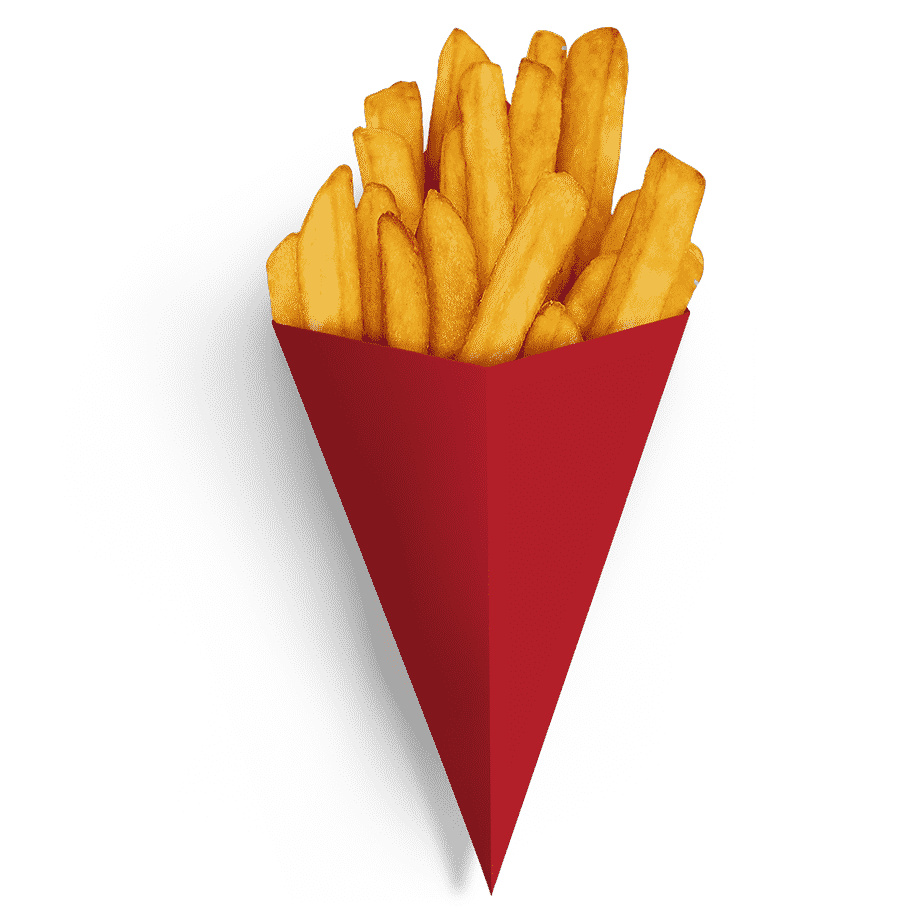
Professional kitchens increasingly build menu offerings around fries as a base component – not just as a side. Loaded fry concepts, fusion plates, and shared platters now represent significant revenue streams across Asian, Middle Eastern, and Latin American-influenced operations. These applications create technical demands that standard fries cannot meet.
The operational challenge is structural: when fries must survive heavy sauce coverage, wet toppings, or extended platter exposure, crispness becomes an engineering requirement, not a cooking preference.
Modern foodservice menus subject fries to conditions that conventional products were never designed to handle.
Asian fusion operations coat fries entirely in liquid glazes – gochujang, teriyaki, fish sauce caramel. The sauce isn’t optional or on the side; it’s the dish concept. Fries must maintain textural integrity while covered in moisture during shared-plate consumption.
Middle Eastern service models place fries on shared platters alongside shawarma meat releasing juices, tahini drizzles, pickled vegetables leaking brine, and yogurt-based sauces. The moisture migration is passive but continuous. Fries absorb liquid from neighboring components even without direct topping.
Latin American loaded concepts pile fries with fresh pico de gallo, liquid cremas, melted cheese sauces, and acidic dressings – assembled at service, not at consumption. Fries face direct multi-source moisture contact before eating begins.
In all three contexts, standard porous fries collapse rapidly. Texture degrades before customers finish the dish. The promised “crispy fries” become soggy base layers.
All Lutosa coating - whether flavoured or not - are gluen-free, i.e. they do not contain wheat or derivatives of wheat. This makes them well-suited for people who suffer from celiac disease and for those who prefer to stick to a gluten-free diet.
The structural advantages of heavily coated fries translate differently depending on service format and operational constraints. Each foodservice model faces specific challenges where moisture resistance and extended hold time become critical performance factors.
Ghost kitchens and delivery-focused concepts serving Korean-style loaded fries, Mexican street food, or Middle Eastern platters face assembly-to-consumption delays that standard fries cannot tolerate. Coated fries provide the structural stability needed for delivery timing.
Fast-casual operations building premium loaded offerings at €12-15 price points need component integrity to justify pricing. Fries that collapse before consumption undermine perceived value. Structural persistence protects margin.
Festival and event vendors assembling loaded fries at point-of-sale face variable consumption timing. Coated fries provide tolerance for delays between assembly and first bite.
Multi-cultural urban restaurants running fusion menus integrate fries into diverse flavor systems—Asian glazes, Middle Eastern mezze, Latin American toppings. Each application creates different moisture vectors. Coated fries handle these contexts as routine operating conditions rather than edge cases requiring workarounds.
When fries function as a base for complex assemblies rather than a simple side, product selection becomes a technical specification problem.
The question isn’t “what’s the cheapest fry?” but “which fry can perform under my service model’s moisture exposure, topping weight, and timing constraints?”
Standard fries optimized for dry seasoning and immediate service cannot handle loaded concepts, sauce-heavy applications, or shared-platter formats. Operators either accept higher complaint rates, over-portion to compensate for collapse, or restrict menu offerings to what standard products can tolerate.
Engineered coated fries – specifically heavily coated options like Lutosa Ultra Crunchy – provide structural capacity to build revenue-generating loaded concepts with maintained quality consistency.
For foodservice operations where fries are revenue centers rather than commodity sides, coating choice determines menu feasibility and quality delivery.
Want to test coating performance with your specific sauce systems and topping combinations?
Contact us.
Related articles :

Receive our latest news and projects.