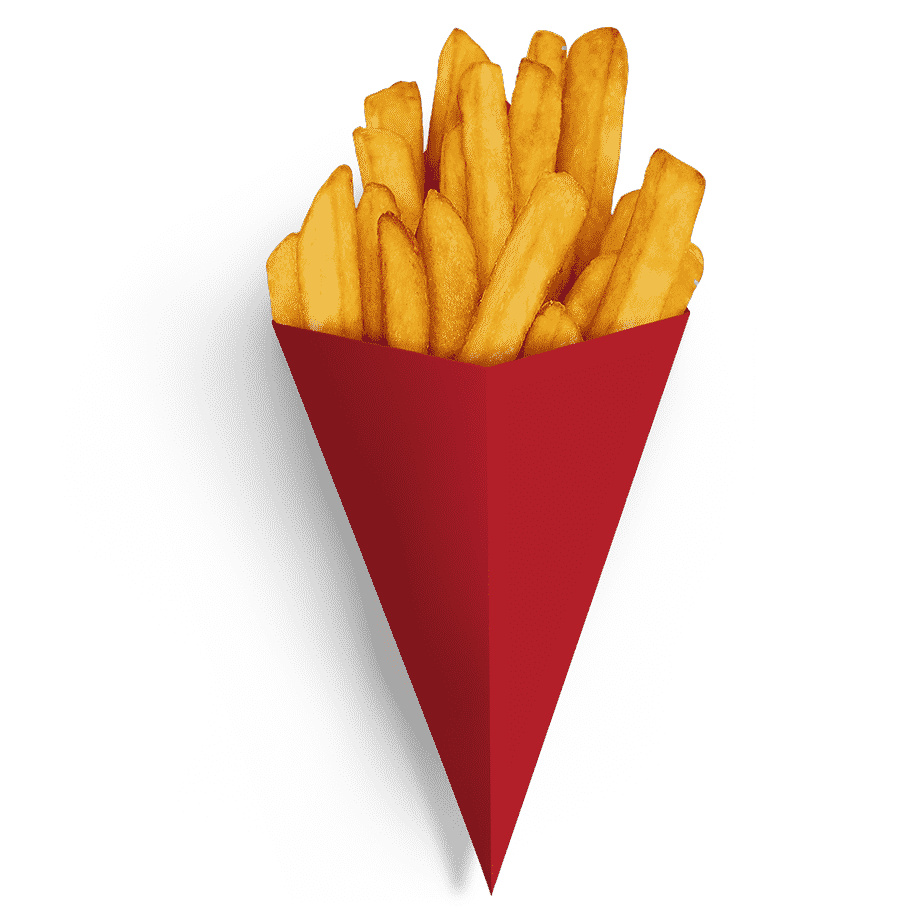
Asian fusion cuisine has embraced fries as a textural counterpoint to sauce-forward, umami-rich flavor profiles. Korean gochujang-glazed fries, Japanese okonomiyaki-style loaded fries, Thai basil fries with fish sauce caramel – these dishes treat fries as an active component in complex flavor layering, not as a neutral side.
This integration creates an immediate technical challenge: Asian sauces are typically liquid, sticky, and applied generously. These aren’t dipping sauces – they’re full coverage applications. Standard fries fail under this treatment. Their porous crust absorbs sauce rapidly, and the textural contrast that makes the dish work disappears.
Korean fusion loaded fries have become signature dishes in urban restaurants across Europe and North America. The typical formula: fries topped with gochujang-glazed fried chicken, kimchi, spring onions, sesame seeds, and drizzles of Korean mayo or cheese sauce.
Every component adds moisture. Gochujang sauce drips from the chicken onto fries. Kimchi releases fermentation liquid. Mayo and cheese sauces pool at the bottom.
Heavily coated fries resist this saturation longer than standard options. The starch-based coating delays liquid penetration, maintaining textural contrast during shared appetizer or small plate service where consumption isn’t instantaneous.
This resistance also preserves visual appeal that drives social media sharing. Korean loaded fries are photographed constantly – structural collapse before the photo eliminates marketing value.
Japanese fusion concepts often create okonomiyaki-style loaded fries: topped with Japanese mayo, okonomiyaki sauce, bonito flakes, pickled ginger, and sometimes a fried egg. The topping weight is substantial.
Standard fries bend or break under this load, especially once moisture from sauces begins weakening the structure. Coated fries maintain better rigidity, allowing proper component stacking without structural collapse. The dish remains hand-held feasible rather than requiring cutlery.
Loaded fries featuring Thai-inspired toppings appear in street food concepts across Europe, often combining fish sauce caramel, lime juice, fresh herbs, chili flakes, and crushed peanuts. The flavor profile is intensely layered: sweet, salty, sour, spicy, herbaceous.
For this complexity to work, the fry must provide textural simplicity – clean crunch that supports flavor rather than competing with it. When the fry goes soft, the entire balance shifts. The dish becomes one-dimensional: wet, saucy, without textural relief.
Moisture-resistant coated fries maintain that textural anchor point longer after sauce contact. They remain crunchy enough for the flavor complexity to be experienced with textural contrast rather than textural uniformity.
For operators building Asian fusion menus where loaded fries command premium pricing, coating choice directly impacts whether the dish delivers on its sensory promise throughout consumption.
Those articles might interest you :

Receive our latest news and projects.