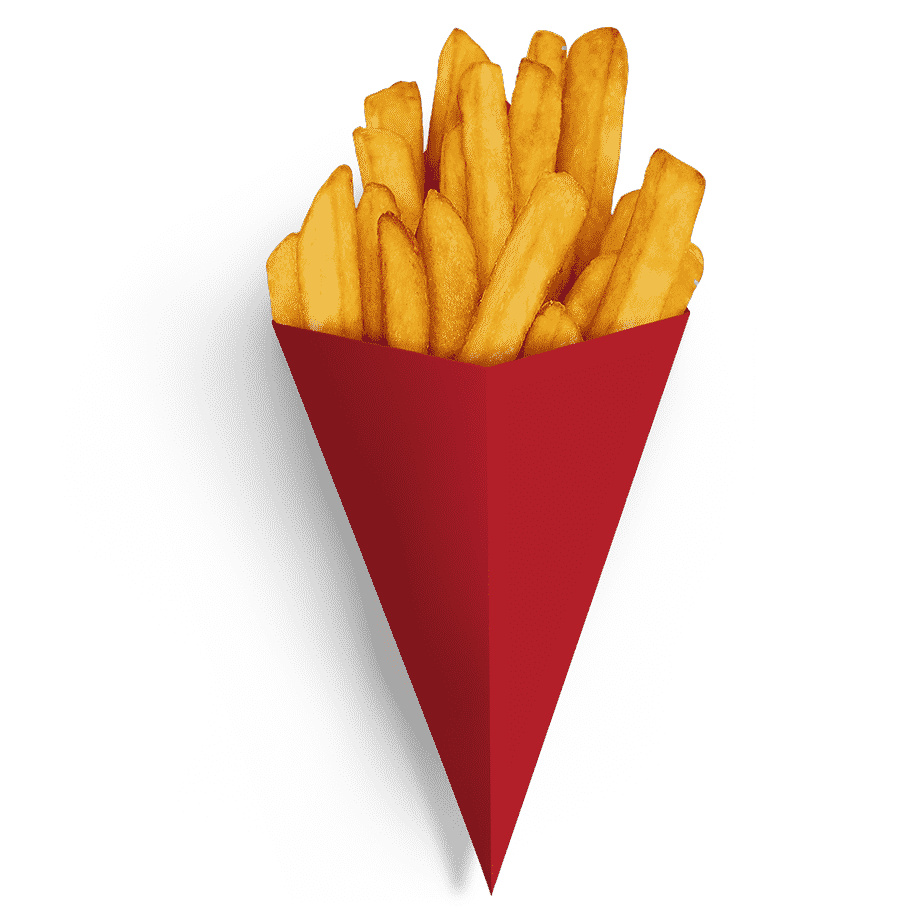
Premium pricing in foodservice requires more than quality—it requires justification that guests recognize before, during, and after the meal. Operations charging premium prices face a fundamental challenge: every component must validate the pricing decision.
Fries represent a particular risk in premium contexts. They’re visible, familiar, and directly comparable to alternatives. When premium mains are accompanied by standard fries, guests perceive inconsistency that undermines the entire positioning strategy. The question isn’t whether premium fries cost more—it’s whether they deliver sufficient value through quality signals, operational advantages, and margin expansion to justify the investment.
Premium positioning isn’t declared—it’s demonstrated through consistent execution across multiple dimensions. Guests evaluate premium status through observable characteristics before making value judgments about price.
For fries specifically, premium status manifests through presentation consistency. Plates arrive with uniform appearance—consistent color, regular shape, appropriate volume. This visual regularity signals process control and quality standards that guests associate with premium operations.
All Lutosa coating - whether flavoured or not - are gluen-free, i.e. they do not contain wheat or derivatives of wheat. This makes them well-suited for people who suffer from celiac disease and for those who prefer to stick to a gluten-free diet.
Certain foodservice segments face particular pressure to justify premium pricing through complete quality consistency. Component inconsistency damages premium positioning more severely in these contexts than in value segments where expectations are calibrated differently.
All Lutosa coating - whether flavoured or not - are gluen-free, i.e. they do not contain wheat or derivatives of wheat. This makes them well-suited for people who suffer from celiac disease and for those who prefer to stick to a gluten-free diet.
Gastropubs occupy the space between casual and fine dining—elevated ingredients, thoughtful preparation, premium pricing without fine dining formality. This positioning creates specific quality requirements.
Every menu component becomes a statement of standards. Guests choosing gastropubs over casual alternatives expect quality consistency across the menu, not just in featured items. Fries accompanying premium mains must match the quality proposition or create cognitive dissonance.
Belgian heritage positioning provides natural differentiation in these contexts. Menu descriptions referencing Belgian preparation methods or provenance create quality associations without requiring elaborate explanation. Lutosa’s 45 years of Belgian expertise provides authentic heritage that resonates with quality-conscious guests.
The operational challenge in gastropubs: high volume with premium expectations. Kitchens must deliver consistent quality during rush periods without compromising standards. Products that maintain quality despite timing variability enable gastropubs to operate at scale while preserving premium positioning.
Premium establishments depend on staff confidently recommending menu items. When products consistently perform well, servers promote them without hesitation. This confidence directly affects average check and guest satisfaction.
Quality variability creates staff defensiveness. When fries sometimes perform well but sometimes disappoint, servers become uncertain. This uncertainty manifests as under-recommendation, pre-emptive apologies, or hedged descriptions. Guests perceive this hesitation and interpret it as quality doubt.
Consistent products that perform reliably create staff advocacy. Servers trust the quality, recommend confidently, and create positive expectations. This confidence is particularly valuable in premium contexts where staff must justify pricing through enthusiastic endorsement.
The training implication: staff need fewer caveats and conditional descriptions when products perform consistently. Training focuses on positive attributes rather than managing guest expectations around quality variability. This shift improves service quality and guest perception.
Related articles :

Receive our latest news and projects.