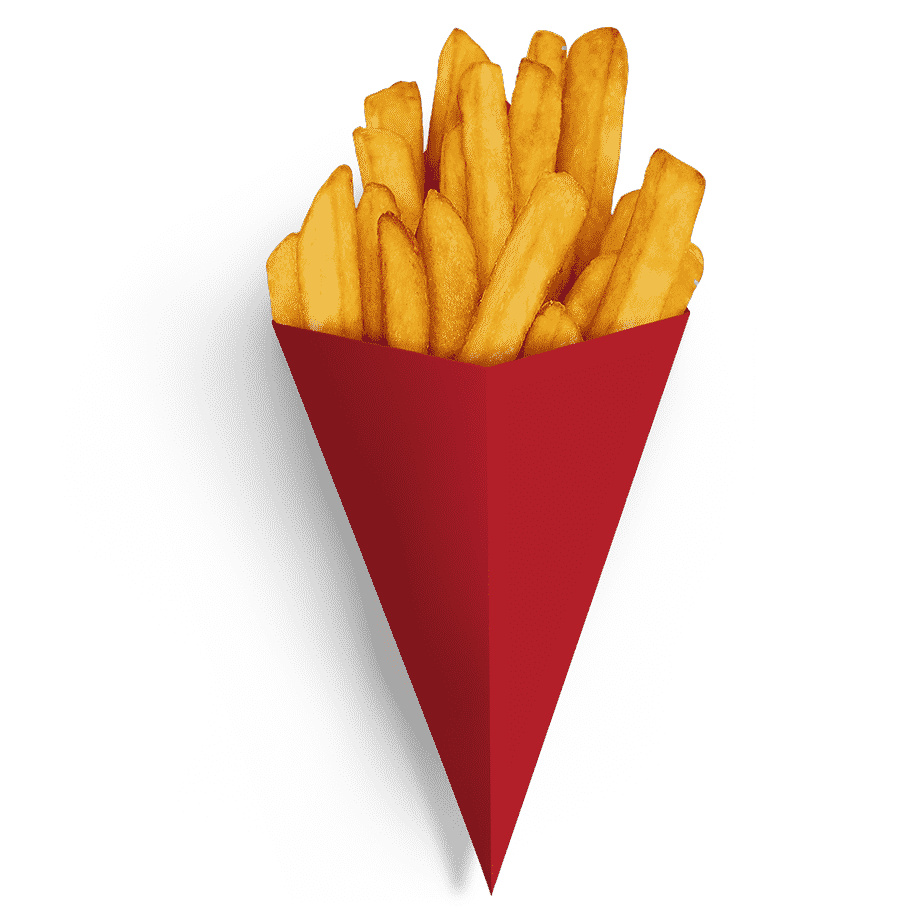
Takeaway and Delivery Crispy Fries

Streamlining Off-Premise Operations: How Fry Selection Impacts Kitchen Workflow and Profitability

In off-premise foodservice, fries aren’t just a menu item—they’re a workflow variable that directly affects kitchen efficiency, labor costs, and operational margin. Most operators focus on cooking technique or packaging when addressing quality issues in takeaway and delivery. The actual constraint lies earlier: in the product specification itself.

A fry designed for immediate dining-room service creates operational friction when applied to off-premise channels. That friction compounds into measurable costs that exceed any initial procurement savings.

The Hidden Cost Structure of Short-Hold Fries

Standard fries force reactive kitchen behavior. When hold time is limited to 5-10 minutes, kitchens must cook in small, frequent batches synchronized to individual order timing. This creates constant workflow interruption where staff attention shifts from coordinated batch production to reactive, order-by-order firing. Each interruption breaks concentration and slows parallel tasks.

Partial-load equipment usage follows naturally. Fryers run continuously at 30-50% capacity rather than efficient full-load cycles. Energy cost per portion rises while equipment lifespan decreases from constant temperature fluctuation. During rush periods, timing compromises become inevitable. Staff either over-batch, creating waste, or under-batch, creating delays. Neither choice maintains consistent quality.

The mental load multiplies across the shift. Staff track multiple timers, coordinate across service channels, and make real-time judgment calls about product viability. Each decision carries quality risk and cognitive cost. These aren’t execution failures—they’re structural consequences of using products not engineered for the actual service model.

Did you know that?

All Lutosa coating - whether flavoured or not - are gluen-free, i.e. they do not contain wheat or derivatives of wheat. This makes them well-suited for people who suffer from celiac disease and for those who prefer to stick to a gluten-free diet.

How Extended Hold Time Restructures Kitchen Operations

Fries maintaining quality for 30 minutes transform kitchen workflow by decoupling cooking from immediate service demand. Kitchens move from reactive firing to planned intervals. Instead of cooking every 6-8 minutes chasing individual orders, they cook every 20-25 minutes in coordinated batches. This regularity improves equipment utilization through full-load frying, energy efficiency from fewer heat-up cycles, staff focus through planned work rather than constant interruption, and cross-channel coverage where one batch serves dine-in, takeaway, and delivery simultaneously. Peak periods no longer force quality compromises. Kitchens pre-cook capacity ahead of predicted demand peaks. Orders wait seconds for portioning rather than minutes for cooking. Staff handle volume through efficient plating rather than reactive frying. Quality remains stable regardless of order velocity because the product tolerates the timing variability that rush periods create. When staff aren’t monitoring fry degradation and timing re-fires, attention shifts to higher-value tasks: order accuracy, packaging quality, customer communication, throughput optimization. This isn’t labor reduction—it’s labor optimization. The same staff accomplish more because product reliability removes a constant monitoring requirement.

The Real Economics of Product Choice

The cost comparison between standard and extended-hold fries appears straightforward at procurement: lower price per case versus higher price per case. This comparison ignores downstream operational costs that only become visible through operational analysis.

Waste from timing mismatches accumulates invisibly. Fries cooked for customers who arrive late become unsalvable when hold time is short. With 30-minute hold, late arrivals still receive acceptable product. Each re-cooked portion consumes staff time, fryer capacity, and energy. Extended hold eliminates most re-fires by maintaining quality through realistic service delays.

When fries slump visually, staff unconsciously add grams to maintain plate appearance. Higher yield from structural stability eliminates this invisible cost leak. Each customer dissatisfaction creates handling time, potential refunds, and lost repeat business. Stable quality reduces complaint volume measurably.

When these operational costs are included, the total cost per acceptable portion often inverts: the “expensive” fry becomes cheaper to operate.

Single-Product Strategy for Multi-Channel Operations

Most modern kitchens operate three channels simultaneously: dine-in with immediate service, takeaway with 10-30 minute variable delay, and delivery with 15-25 minute fixed delay plus transport. Standard products force channel-specific handling—different cooking times, different hold strategies, different quality outcomes. This creates operational complexity that scales with volume.

A fry maintaining quality across the full timing spectrum enables unified treatment: cook once, serve to any channel. The product adapts to channel requirements rather than forcing the kitchen to adapt workflow to product limitations. This simplification matters most during rush periods when coordinating multiple treatment protocols creates error risk.

Ghost kitchens and multi-brand facilities compound workflow complexity. One kitchen serves three or four brands simultaneously, each with different positioning and delivery timing. Using different fry specifications per brand multiplies inventory complexity, increases training requirements, and creates quality inconsistency from staff confusion about which specification applies to which brand.

The alternative: select a fry engineered for the longest delivery window and apply it across all brands. A product with 30-minute hold covers slow delivery scenarios while performing equally well in faster ones. This isn’t compromise—it’s selecting a specification that spans the full operational reality rather than forcing staff to manage multiple specifications simultaneously.

Equipment Utilization and Energy Efficiency

Short-hold products force continuous equipment operation at partial capacity. Fryers maintain temperature constantly but fire small batches repeatedly. This operational pattern increases energy consumption per portion, accelerates oil degradation from constant temperature cycling, reduces equipment lifespan from thermal stress, and limits concurrent use for other fried items.

Extended-hold products enable batch cooking at planned intervals with equipment standby between batches when volume allows. This pattern concentrates energy use into efficient full-load cycles, stabilizes oil temperature extending usable life, reduces thermal stress on equipment, and frees capacity for other menu items between planned batches. The energy difference per portion may appear small, but compounds over daily volume.

Staff Retention Impact: Reducing Kitchen Stress

Short hold times create continuous low-grade stress. Staff must monitor exact timing across multiple orders, judge optimal firing moments for unpredictable arrivals, make quality decisions about serving borderline product or remaking, and manage customer expectations when timing fails. These micro-decisions happen dozens or hundreds of times per shift. Each carries quality risk and mental load.

When fries maintain quality over extended periods, these decisions disappear. Staff trust that product cooked 15 minutes ago remains servable. Timing becomes flexible rather than critical. This confidence reduction matters for staff retention in an industry with chronic labor shortages. Kitchens that reduce unnecessary stress retain staff longer.

Lutosa Ultra Crunchy: Engineered for Operational Reality

Ultra Crunchy addresses off-premise workflow challenges through three documented specifications:

  • 30-minute hold time covers realistic service delays across takeaway and delivery without quality degradation, enabling planned batch cooking rather than reactive firing.
  • Up to 66% oil absorption reduction extends oil life, reduces operational cost, and delivers cleaner product. The coating functions as an oil barrier, protecting both product quality and operational economics.
  • Up to 7% yield improvement occurs because fries maintain visual structure—staff don’t unconsciously over-portion to compensate for slumping. More portions per case without quality compromise.

These specifications aren’t marketing claims—they’re operational parameters that directly impact workflow efficiency and cost structure.

Did you know that?

All Lutosa coating - whether flavoured or not - are gluen-free, i.e. they do not contain wheat or derivatives of wheat. This makes them well-suited for people who suffer from celiac disease and for those who prefer to stick to a gluten-free diet.

Validate the Operational Impact in Your Kitchen

Want to measure workflow efficiency improvement, waste reduction, and labor optimization in your off-premise operation?

Contact a Lutosa advisor to discuss your specific service model and operational constraints.

Lutosa UK/Ireland

Subscribe to our  Newsletter

Receive our latest news and projects.

Email