Thick Coated Fries

Thick Coated Fries: How Heavy Coating Delivers Maximum Performance and ROI

Coating thickness directly determines fry performance under professional foodservice conditions. Thin coatings provide modest improvements. Medium coatings deliver noticeable advantages. Thick coatings—like those on Ultra Crunchy fries—create measurable performance differentiation that translates to operational and financial benefits.

Understanding coating weight and its impact helps operators match product specifications to service requirements. Not all operations need maximum coating thickness—but those with extended holding, delivery focus, or quality-sensitive positioning benefit substantially from heavy coating engineering.

What Coating Thickness Actually Means

Coating thickness refers to the weight of starch-based barrier applied to potato surface before freezing. This protective layer affects moisture migration speed, oil penetration, structural integrity, visual appearance, and hold time duration. Thicker coatings enhance all these characteristics more dramatically than lighter applications—the relationship isn’t linear, with heavy coatings providing disproportionate performance advantages compared to modest coating weights.

Did you know that?

All Lutosa coating - whether flavoured or not - are gluen-free, i.e. they do not contain wheat or derivatives of wheat. This makes them well-suited for people who suffer from celiac disease and for those who prefer to stick to a gluten-free diet.

The Three Coating Weight Categories: Each Engineered for Specific Excellence

Lutosa offers three coating weight levels, each optimized for distinct culinary positioning and operational contexts.

Light Coating: Crispy Salted

Crispy Salted delivers subtly coated, lightly salted fries that enhance natural potato flavor with improved crispness. The golden, crunchy texture emphasizes authentic potato character rather than masking it. Pre-salted formulation saves kitchen time while ensuring consistent seasoning across every portion.

This range excels in fast-rotation environments with immediate consumption: counter service with instant handoff, traditional dining, and operations prioritizing authentic potato flavor with contemporary texture. Crispy Salted enhances crispness without creating thick barriers, keeping the potato itself as the hero.


Medium Coating: Xtra Crispy

Xtra Crispy features thicker coating ensuring ultra-crispy texture that stays perfect even after serving. This intermediate specification resists time better than light coating while avoiding maximum coating investment. The versatility extends to multiple preparation methods: traditional frying, oven, or air fryer, providing flexibility across cooking technologies. Suitable for takeaway and delivery where moderate hold time matters, Xtra Crispy reduces oil absorption for healthier positioning. It fits dine-in restaurants with brief delays, casual concepts with growing takeaway business, and mixed service models balancing immediate service with moderate transport. Xtra Crispy bridges immediate service excellence and extended performance—the sweet spot for operations evolving toward delivery without full delivery-dominant commitment.

Heavy Coating: Ultra Crunchy

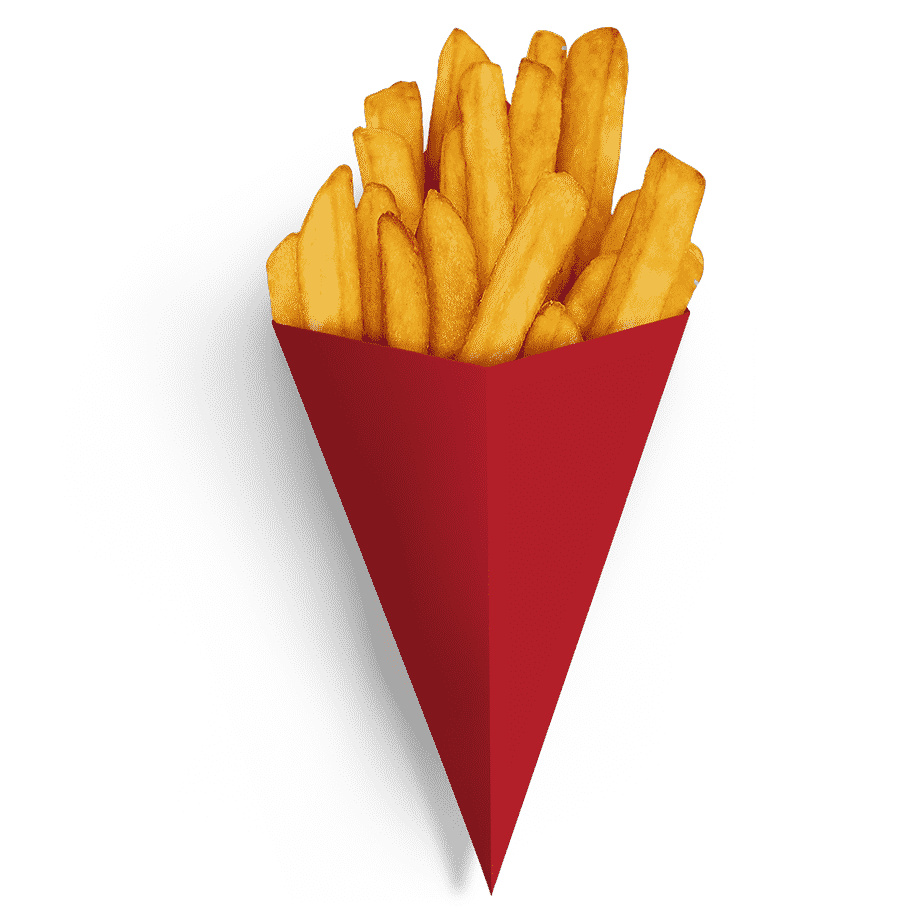
Ultra Crunchy delivers maximum performance: up to 30 minutes hold time, up to 66% oil absorption reduction, up to 7% better yield, and strongest structural stability. Specifically engineered for delivery contexts where fries must survive variable timing, transport stress, and consumption delays. Essential for delivery-focused operations, hotels with room service, buffets with extended holding, and premium concepts where quality consistency is non-negotiable. Ultra Crunchy provides maximum insurance against timing variability, transport stress, and service unpredictability—engineered performance for demanding professional environments where quality failure creates measurable reputation damage.

Choosing the Right Coating

Crispy Salted excels when authentic potato flavor with natural salting matters most and service is immediate.

Xtra Crispy delivers reliable performance across varied service conditions with versatile cooking methods.

Ultra Crunchy becomes essential when maximum crispness duration and timing unpredictability require engineered resilience.

Each product excels in its category—the question is which operational profile matches yours.

Did you know that?

All Lutosa coating - whether flavoured or not - are gluen-free, i.e. they do not contain wheat or derivatives of wheat. This makes them well-suited for people who suffer from celiac disease and for those who prefer to stick to a gluten-free diet.

The Technical Relationship: Coating Weight and Performance

Moisture Barrier Physics

The coating’s primary function is slowing moisture migration from potato interior to crust surface. This migration—driven by temperature gradients after cooking—causes the softening that destroys crispness. Light coatings slow this migration modestly. Water molecules still permeate relatively quickly. Heavy coatings create more substantial barriers—the greater coating mass provides more resistance to moisture movement, dramatically extending duration before surface saturation occurs. This physical barrier advantage explains why Ultra Crunchy’s heavy coating delivers superior 30-minute hold time. It’s hydrophobic layer thickness creating measurable moisture resistance.

Oil Absorption Control

Coating thickness also determines oil absorption during frying. The hydrophobic barrier repels oil penetration—with effectiveness correlating to coating mass. Light coating provides modest reduction of approximately 20% versus uncoated. Medium coating achieves intermediate reduction around 40%. Heavy coating on Ultra Crunchy delivers maximum reduction up to 66% less than uncoated alternatives. This progression affects multiple operational metrics: direct oil cost savings, extended oil life from reduced turnover, improved nutritional profile for health-conscious positioning, and cleaner eating experience with less greasiness. Operations prioritizing oil cost control or health positioning benefit most from maximum coating thickness.

Structural Integrity Enhancement

Beyond moisture and oil control, coating thickness affects structural characteristics. Heavy coatings like Ultra Crunchy substantially improve structural integrity, making fries resistant to bending, breaking, and mechanical damage throughout service. This durability reduces waste from damaged product and improves plate presentation consistency—advantages particularly valuable for delivery-focused operations where fries experience more handling and transport stress than dine-in service.

Visual Appearance and Quality Signaling

Coating thickness affects visual appearance. Light coatings remain nearly invisible—fries look similar to uncoated alternatives. Heavy coatings become noticeable as textured surface appearance.

Ultra Crunchy’s heavy coating is visibly distinctive. This visibility signals premium preparation, specialty product, or superior quality. Operations emphasizing Belgian fries, artisanal preparation, or premium positioning can leverage coating visibility as quality signal communicating specialty preparation that justifies premium pricing.

When to Choose Maximum Coating Thickness

Heavy coating delivers maximum performance—but the decision depends on identifying whether your operation faces the specific challenges it solves.

  • Structural timing unpredictability creates the primary case for heavy coating. When you cannot control consumption timing—delivery windows beyond 20 minutes, variable click-and-collect pickup, room service with transport delays—standard or medium coatings risk quality failure. Operations where timing gaps are built into the service model rather than occasional exceptions require 30-minute hold time insurance.
  • Transport and handling stress intensifies where fries move through multiple touch points before consumption. Delivery packaging and unpackaging, hotel banquet service, catering for off-site events, or stadium service where guests navigate crowds—these scenarios demand structural reinforcement beyond medium coating capabilities.
  • Premium positioning vulnerability makes coating selection strategic. Concepts charging premium prices cannot afford quality inconsistency. When guests pay premium prices for combos, soggy fries after brief delays damage reputation disproportionately. Heavy coating protects premium pricing by eliminating quality variability that destroys value perception.
  • Oil cost pressure affects high-volume operations substantially. Sites frying hundreds of portions daily see meaningful savings from 66% absorption reduction. When monthly oil expenditure reaches thousands of euros, heavy coating’s efficiency pays for itself through direct cost reduction regardless of hold time benefits.
  • Health-conscious positioning creates differentiation that lighter coatings cannot match as effectively. Corporate catering with wellness requirements, healthcare foodservice with nutritional guidelines, or health-focused concepts all benefit from demonstrable 66% fat reduction—supporting marketing claims and meeting institutional specifications.

The common thread: heavy coating solves structural operational challenges rather than providing incremental improvement. Operations facing these challenges require it. Those not facing them may not need the investment.

Contact a Lutosa advisor to evaluate your impact.

The Economic Value Proposition

Heavy coating typically commands premium pricing versus lighter alternatives. For timing-uncertain operations, the performance benefits justify this investment through multiple mechanisms:
  • Extended hold time reduces waste from time-expired product
  • Maximum oil reduction delivers substantial cost savings
  • Better yield means fewer cases needed for same service volume
  • Reduced complaints and re-service from quality consistency
  • Premium positioning enabling higher menu pricing
These benefits stack. While heavy coating commands premium pricing per case, the operational advantages can offset or exceed the initial cost difference depending on operational volume and service model.

Gluten-Free Coating Technology

All Lutosa coatings—light, medium, and heavy—use gluten-free starch formulations without wheat or wheat derivatives. This specification matters for operations serving celiac guests or emphasizing dietary accommodation. The gluten-free formulation doesn’t compromise performance—starch-based coatings deliver moisture barrier effectiveness, oil resistance, and structural reinforcement equivalent to or exceeding gluten-containing alternatives. This dietary compatibility expands addressable market without requiring separate product lines.

Quality Control and Consistency

Coating application must be uniform across all fries in every case. Inconsistent coating creates performance variability that produces unpredictable guest experiences. Achieving consistent heavy coating at industrial scale requires sophisticated process control. Lutosa’s quality procedures target this consistency, ensuring uniform coating weight across production runs—making performance predictable so operations can rely on specified hold time, oil absorption, and structural characteristics without batch-to-batch variability concerns

Belgian Heritage and Coating Expertise

Belgium’s 45+ years of potato processing expertise includes extensive coating technology development. Heavy coating isn’t simply applying more material—it requires engineering to maintain proper adhesion, cooking performance, and flavor delivery despite increased coating mass. This engineering expertise distinguishes professional foodservice products from basic coated alternatives.

The Bottom Line on Coating Thickness

Coating thickness directly determines fry performance under professional conditions. Heavy coating delivers maximum hold time, oil reduction, yield improvement, and structural stability—characteristics essential for timing-uncertain service models. Ultra Crunchy fries use heavy coating to achieve these measurable specifications, creating operational and financial advantages for operations where timing variability is significant. The decision isn’t whether heavy coating costs more—it’s whether service requirements justify maximum performance specifications. For delivery-focused concepts, hotels, catering, and quality-sensitive operations, heavy coating provides ROI through improved efficiency and protected reputation. Want to evaluate which coating thickness matches your service model? Contact a Lutosa advisor.

Lutosa UK/Ireland

Subscribe to our  Newsletter

Receive our latest news and projects.

Email