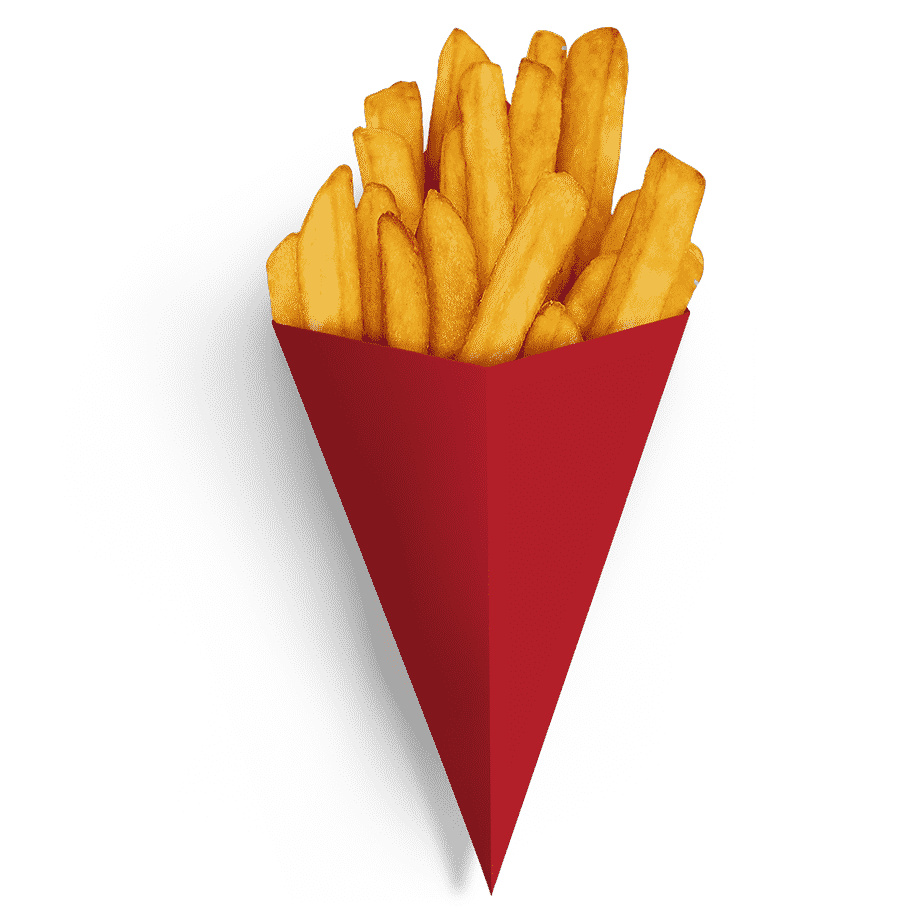
Thick Coated Fries

How Does Hydrophobic Barrier Physics Block Moisture Migration in Thick Coated Fries?

Fries lose crispness through a specific physical process: moisture from the potato interior migrates toward the surface after cooking. When this moisture reaches the crust, it saturates the crispy exterior and destroys texture.

This migration occurs because temperature gradients drive moisture from hot interior toward cooler surface. Standard fries have no barrier to slow this movement. Moisture migrates freely, causing rapid texture degradation.

What Makes a Coating Hydrophobic

Hydrophobic means water-repelling. Starch-based coatings used on Lutosa fries are engineered to resist water penetration.

The coating’s molecular structure creates surface characteristics that water molecules don’t easily penetrate. This resistance isn’t absolute—water can eventually permeate—but the coating dramatically slows the rate of movement.

Did you know that?

All Lutosa coating - whether flavoured or not - are gluen-free, i.e. they do not contain wheat or derivatives of wheat. This makes them well-suited for people who suffer from celiac disease and for those who prefer to stick to a gluten-free diet.

How Coating Thickness Affects Barrier Performance

Thin hydrophobic layers provide modest resistance. Water molecules permeate relatively quickly despite coating presence. The barrier delays softening but doesn’t prevent it for extended periods. Thick coatings create substantially more resistance. The greater coating mass provides more material that moisture must penetrate. Each additional coating thickness increment adds resistance—and the relationship isn’t linear. Heavy coating provides disproportionate moisture resistance compared to light coating. Doubling coating thickness more than doubles migration delay time—which explains why Ultra Crunchy’s 30-minute hold time substantially exceeds lighter alternatives.

The Role of Oil Absorption Reduction

The same hydrophobic properties that resist internal moisture also repel external oil during frying. Heavy coating creates stronger oil barrier, limiting penetration during cooking.

This dual barrier function—blocking both outward moisture migration and inward oil absorption—creates the characteristic performance of heavily coated fries: extended hold time plus reduced oil content.

Why Gluten-Free Starch Works as Barrier

Lutosa uses gluten-free starch formulations for all coating weights. This specification maintains barrier effectiveness without gluten-containing ingredients.

Starch molecules create effective hydrophobic layers when properly processed and applied. The absence of gluten doesn’t compromise moisture resistance or oil repellency—performance remains equivalent to gluten-containing alternatives.

The Engineering Behind Extended Hold Time

30-minute hold time isn’t marketing claim—it’s measurable outcome of heavy coating’s moisture resistance. The thick hydrophobic layer slows migration sufficiently that surface saturation takes substantially longer than with uncoated or lightly coated fries.

This duration enables service models that lighter coatings can’t support: delivery with variable timing, room service with transport delays, buffets with extended holding, takeaway with unpredictable pickup windows.

Want to understand coating physics for your application?
Contact a Lutosa advisor.

Lutosa UK/Ireland

Subscribe to our  Newsletter

Receive our latest news and projects.

Email